
The Complete Parents’ Guide to ‘The Manosphere’ and Online Radicalization
Start here. This guide helps you make sense of the manosphere and online radicalization—what it is, how boys are drawn in, and what it means for your child.
Return to The Manosphere and Online Radicalization.
-
The manosphere is a network of online communities, influencers, and content that promote rigid, often harmful ideas about masculinity, gender roles, and power.
These spaces are not all the same, but they often share a common thread: They present a version of masculinity rooted in dominance, control, and opposition to gender equality.
-
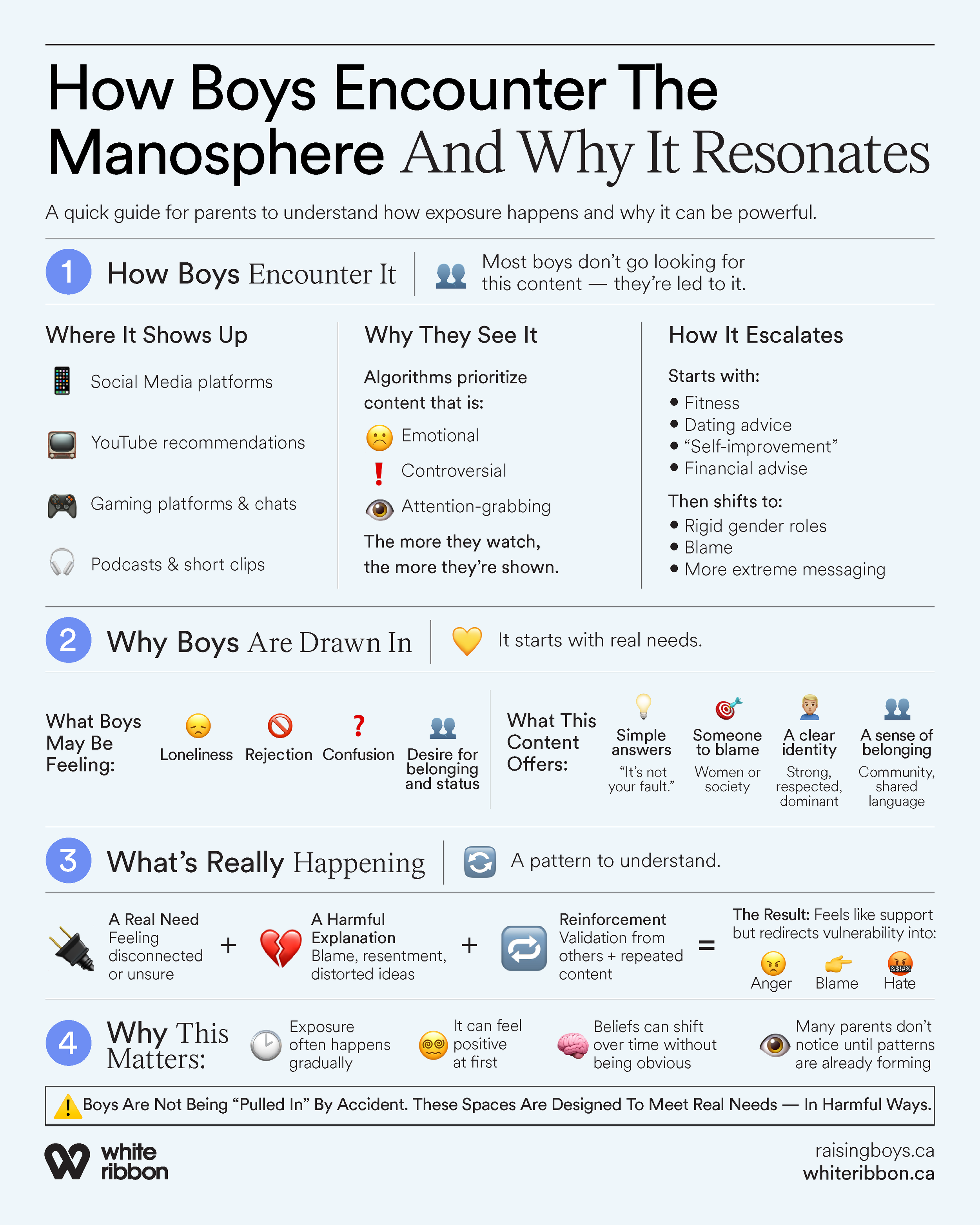
Most boys don’t go looking for the manosphere, they are led to it.
Social media algorithms are designed to keep users engaged. That means content that is provocative, emotional, or controversial is often pushed more aggressively.
What starts as fitness or financial advice, dating tips, or “confidence” content can quickly shift into more extreme messaging.
-
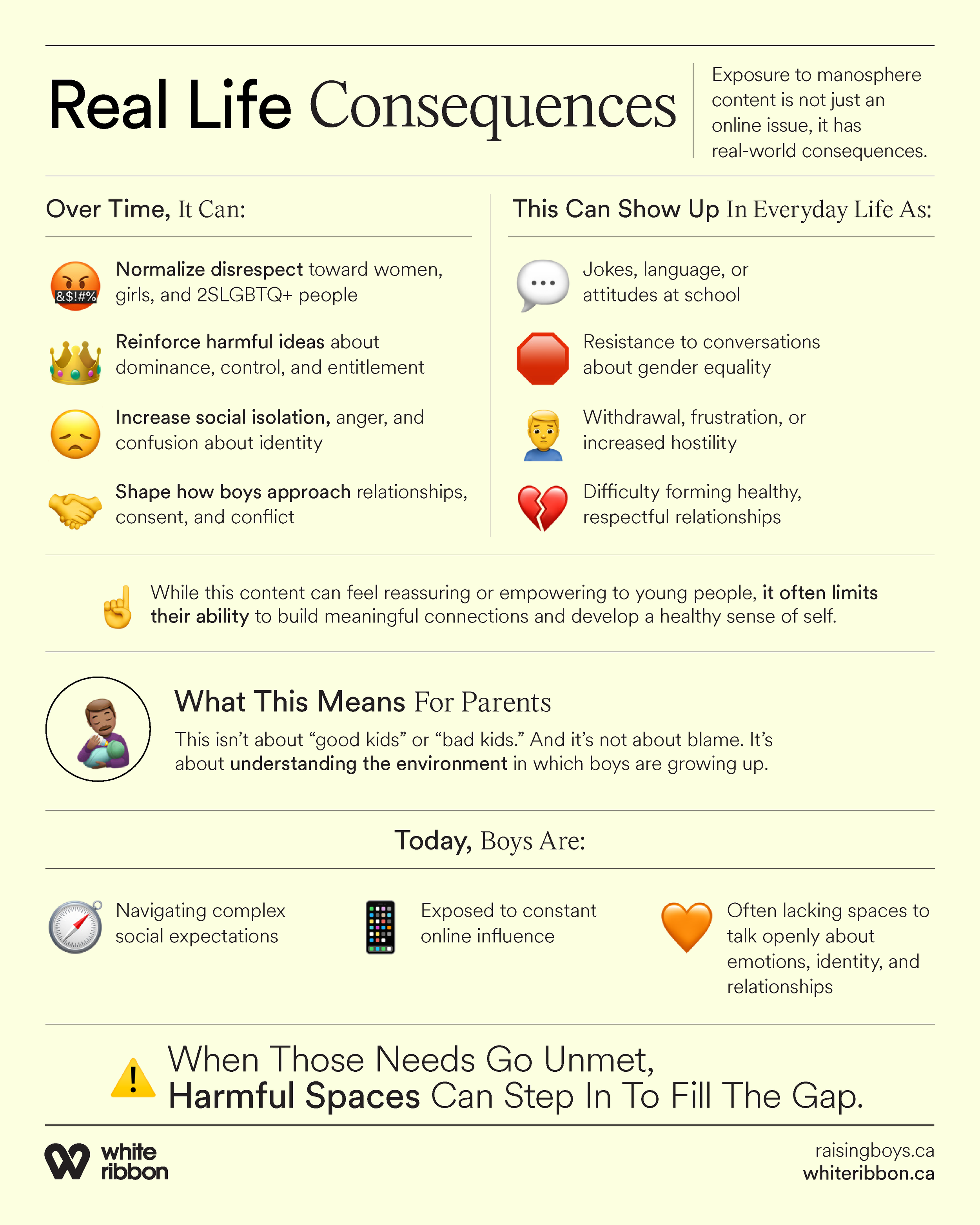
Exposure to manosphere content is not just an online issue, it has real-world consequences.
Over time, it can:
Normalize disrespect toward women, girls, and 2SLGBTQ+ people
Reinforce harmful ideas about dominance, control, and entitlement
Increase social isolation, anger, and confusion about identity
Shape how boys approach relationships, consent, and conflict
While this content can feel reassuring or empowering to young people, it often limits their ability to build meaningful connections and develop a healthy sense of self.
-
As parents, we might ask: “Why would my kid believe this?”
The reality is that the manosphere doesn’t begin with extreme ideas; it often starts with a search for belonging, identity, and success something all boys experience as they grow.
Starts with something relatable → loneliness, rejection, confusion
Offers simple answers → “It’s not your fault, it’s women/society.”
Provides identity → “Be strong, dominant, respected”
Builds community → comments, forums, shared language
It feels like support, but redirects vulnerability into blame.
The infographics below build on this knowledge, breaking down key ideas in a simple, visual way.
Return to raisingboys.ca.
Download and Share
These resources make the manosphere and the online radicalization of boys easier to understand. They break down what these influences are, how they impact boys, and what parents can do. Download them, use them to start meaningful conversations, and share them with others navigating these challenges.
-
![]()
The Manosphere: What Parents Should Know
An introduction to the manosphere—what it is, the ideas it promotes, and how it can shape how boys understand masculinity, relationships, and gender.
-
![]()
How Boys Encounter the Manosphere
Explains how boys are exposed to this content online and why it can be appealing, breaking down the role of algorithms, identity, and the need for belonging.
-
![]()
Real-Life Consequences
Shows how exposure to manosphere content can impact boys’ attitudes, behaviours, relationships, and sense of self—both online and in everyday life.
-
![]()
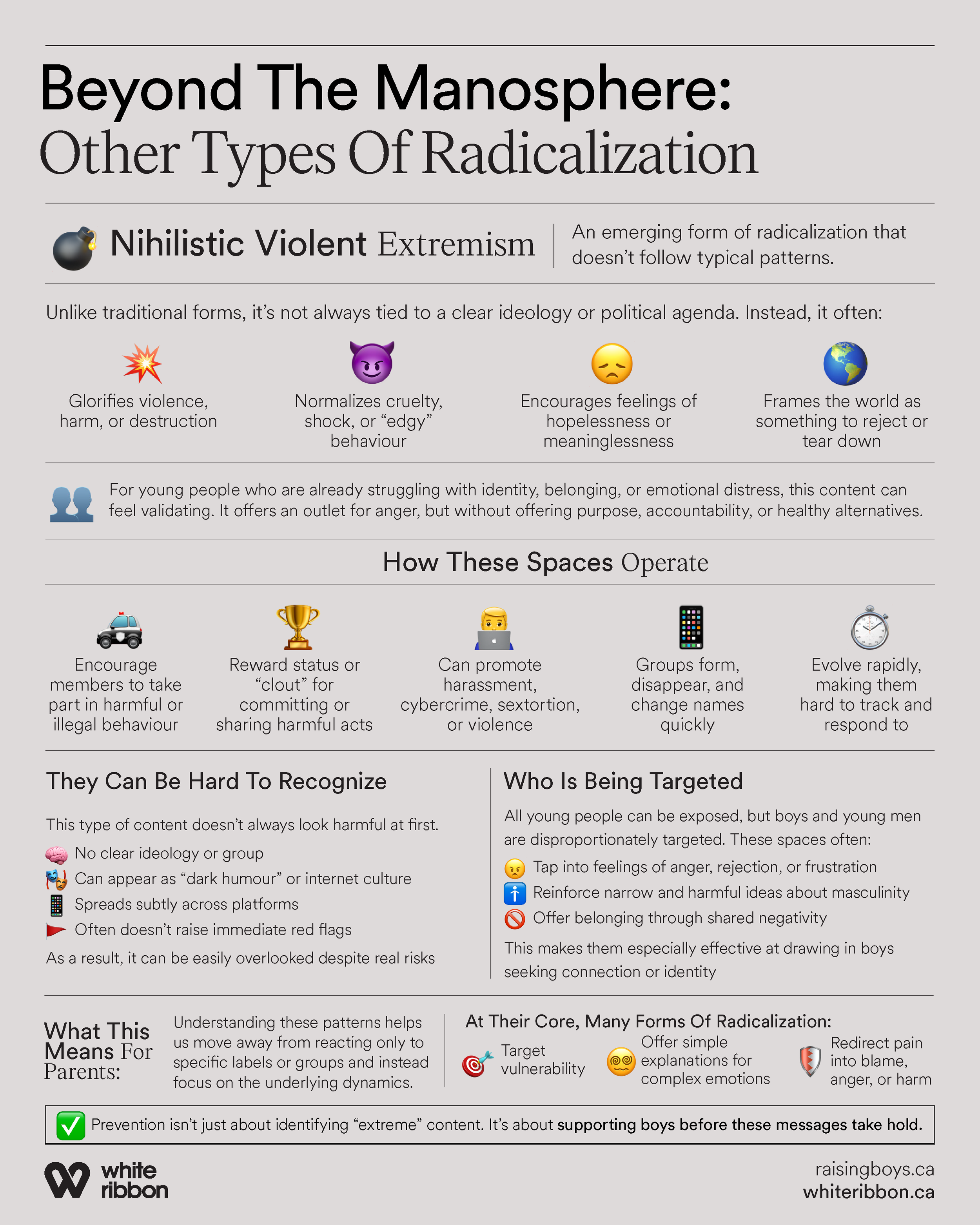
Other Types of Radicalization
Highlights other forms of harmful online influence and radicalization, showing how different content can use similar tactics to shape beliefs and behaviours.
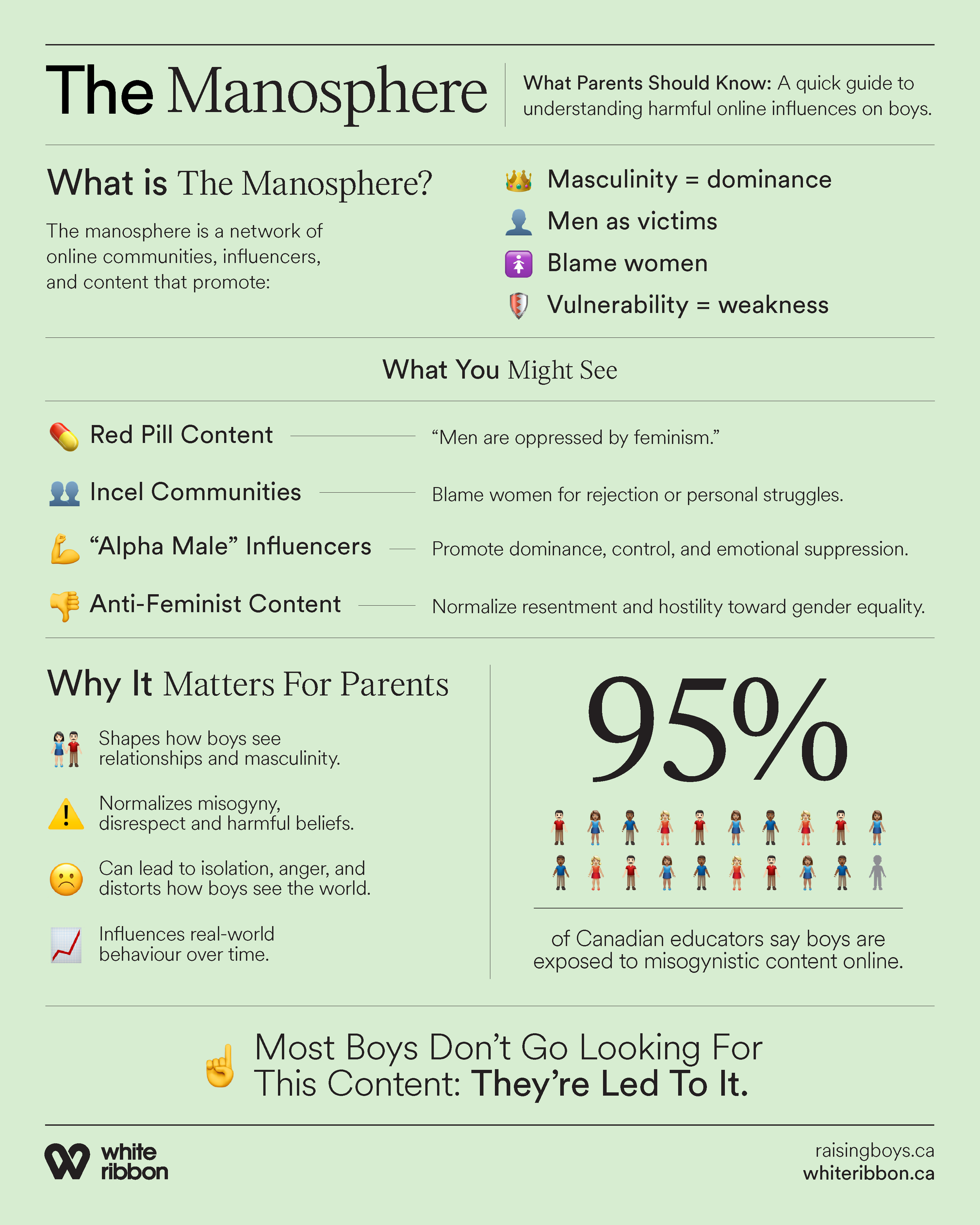
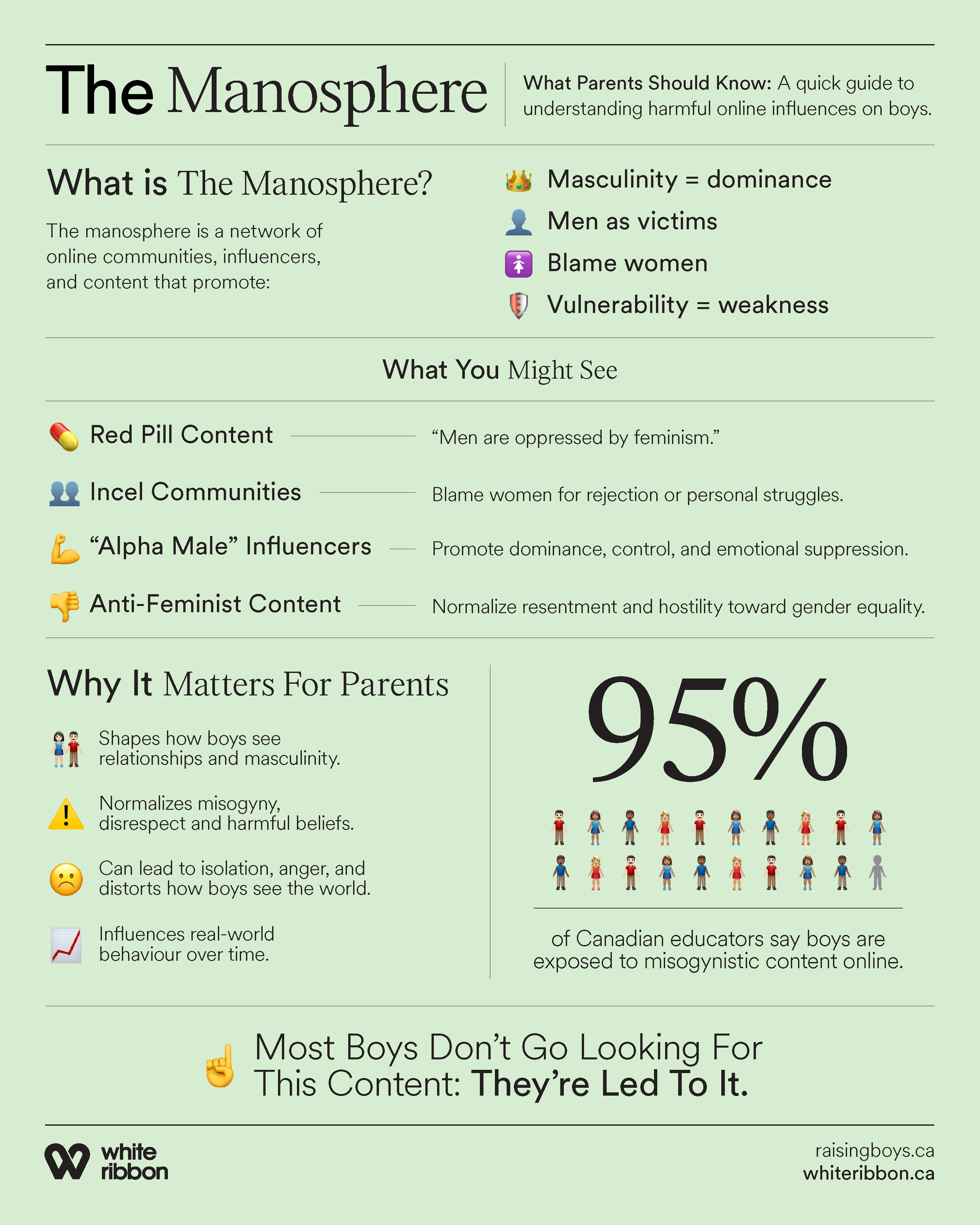
The Manosphere: What Parent Should Know
A quick, accessible guide to help parents understand what the manosphere is, the types of content boys may encounter online, and why these messages can influence how boys view masculinity, relationships, and gender.
This infographic breaks down common narratives, online communities, and harmful messages often found within manosphere content, while helping parents recognize why exposure matters and how these ideas can shape behaviour over time.
Download the infographic and share it with other parents to help more families better understand harmful online influence and support healthier conversations with boys.

How Boys Encounter the Manosphere and Why it Resonates
A simple, visual guide to help parents understand how boys encounter manosphere content online, why these messages can resonate, and how exposure can gradually escalate over time.
This infographic breaks down the role of algorithms, online culture, identity, belonging, and emotional needs in shaping boys’ online experiences and vulnerabilities.
Download the infographic and share it with other parents to help more families better understand and respond to harmful online influence.

Real Life Consequences of the Manosphere
A practical guide to help parents understand how harmful online influences can shape boys’ attitudes, relationships, emotional well-being, and behaviour over time.
This infographic explores how manosphere content and misogynistic messaging can show up in everyday life—from jokes and hostility to emotional withdrawal, unhealthy relationship dynamics, and confusion around identity and belonging.
Download the infographic and share it with other parents to help more families recognize the real-world impact of harmful online content and support healthier conversations with boys.

Other Types of Radicalization
A practical guide to help parents understand emerging forms of online radicalization that can impact boys beyond the manosphere.
This infographic explores nihilistic violent extremism, how these spaces operate online, why they can be difficult to recognize, and how harmful communities can encourage violence, harassment, cybercrime, sextortion, and other harmful behaviour through online influence, status, and belonging.
Download the infographic and share it with other parents to help more families recognize warning signs, understand online radicalization patterns, and support boys before harmful messages take hold.
Talk to Your Son About the Manosphere and What He Sees Online
Understanding the issue is the first step. Knowing how to respond is what makes the difference.
Explore our practical conversation guides and activities to help you talk to your son about what he sees online, build trust, and support him with confidence.

White Ribbon acknowledges the support of Women and Gender Equality Canada.